
In the Studio with Artist Lillian Chun
Today, we are going In the Studio with artist Lillian Chun. Her artwork is on display in the Patricia Barland Gallery from May 16-June 14, 2026

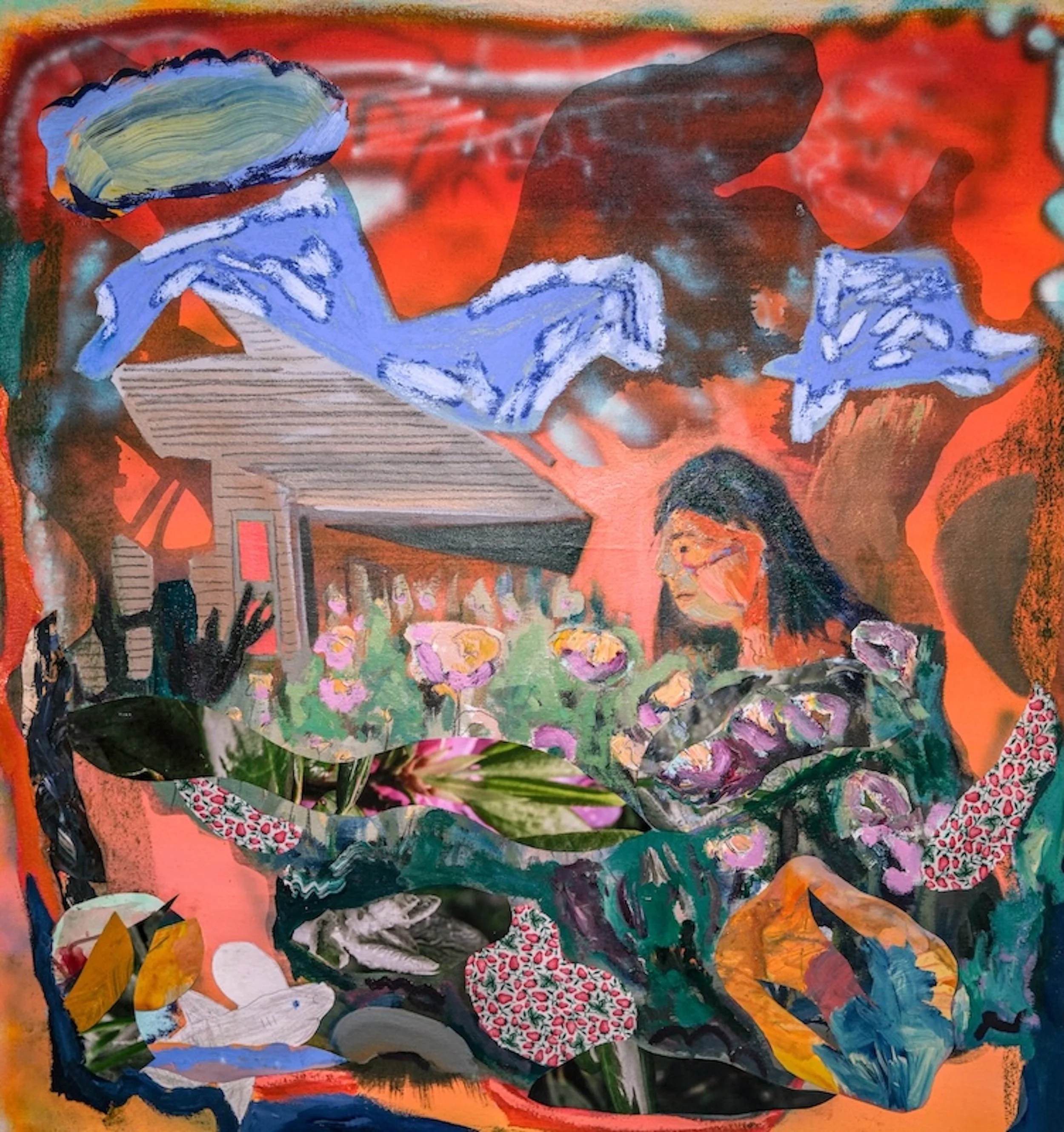
Doggy Paddling Around Dusk and All That Ever Was
30 x 41 inches
Lillian Chun (b. Allentown, PA 1989) is an interdisciplinary artist and educator whose work weaves together different threads of personal experiences and states of being to create visual narratives through mixed media painting and lyrical photography. Chun’s artistic process is a deeply introspective one, where the act of art-making becomes a form of excavation. She has exhibited her work nationally and internationally, with work featured in podcasts and published in contemporary art magazines. Chun earned her BFA from the Maryland Institute College of Art in 2011 and MAT in 2012. She currently lives and works in Ellicott City, MD.
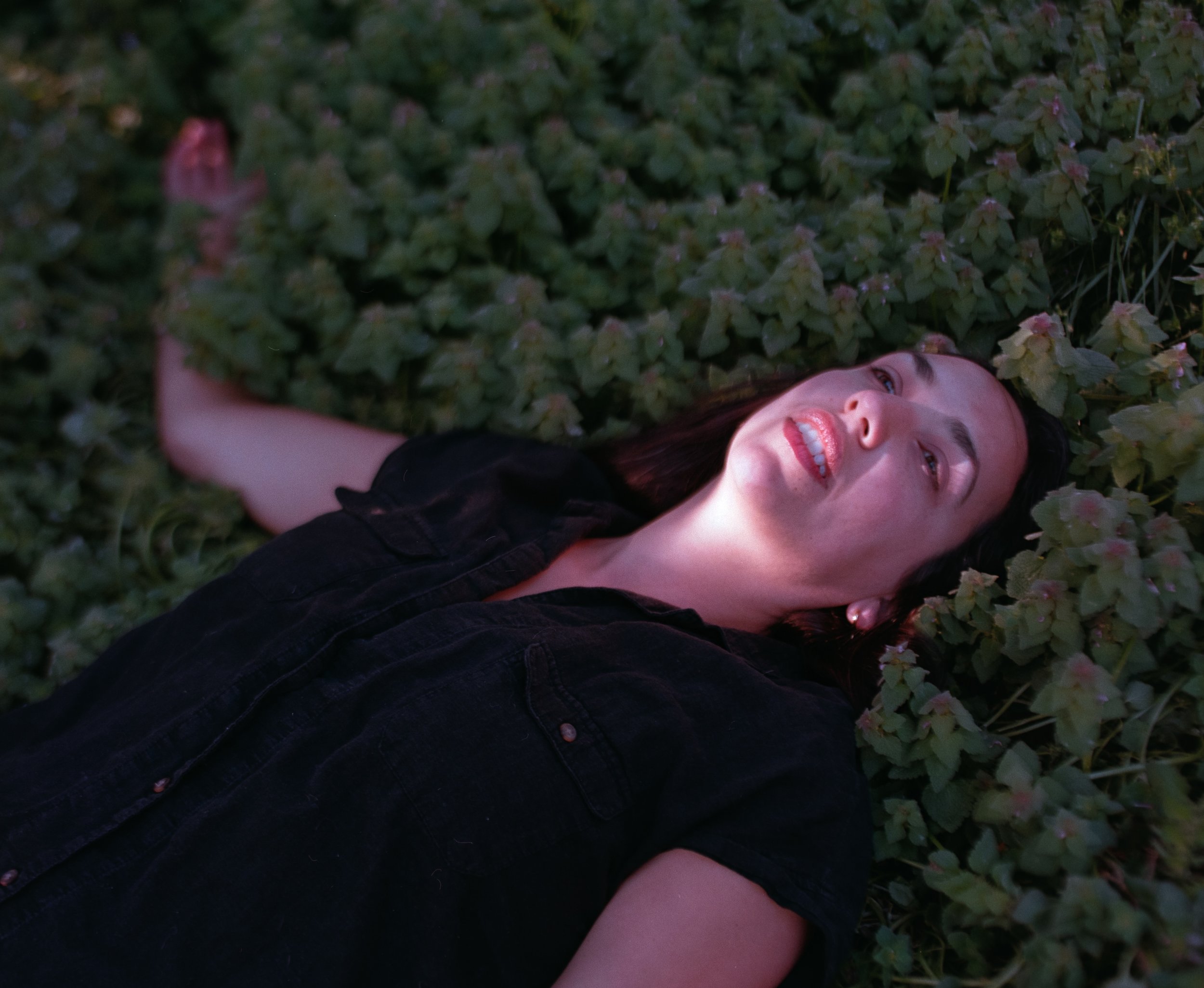
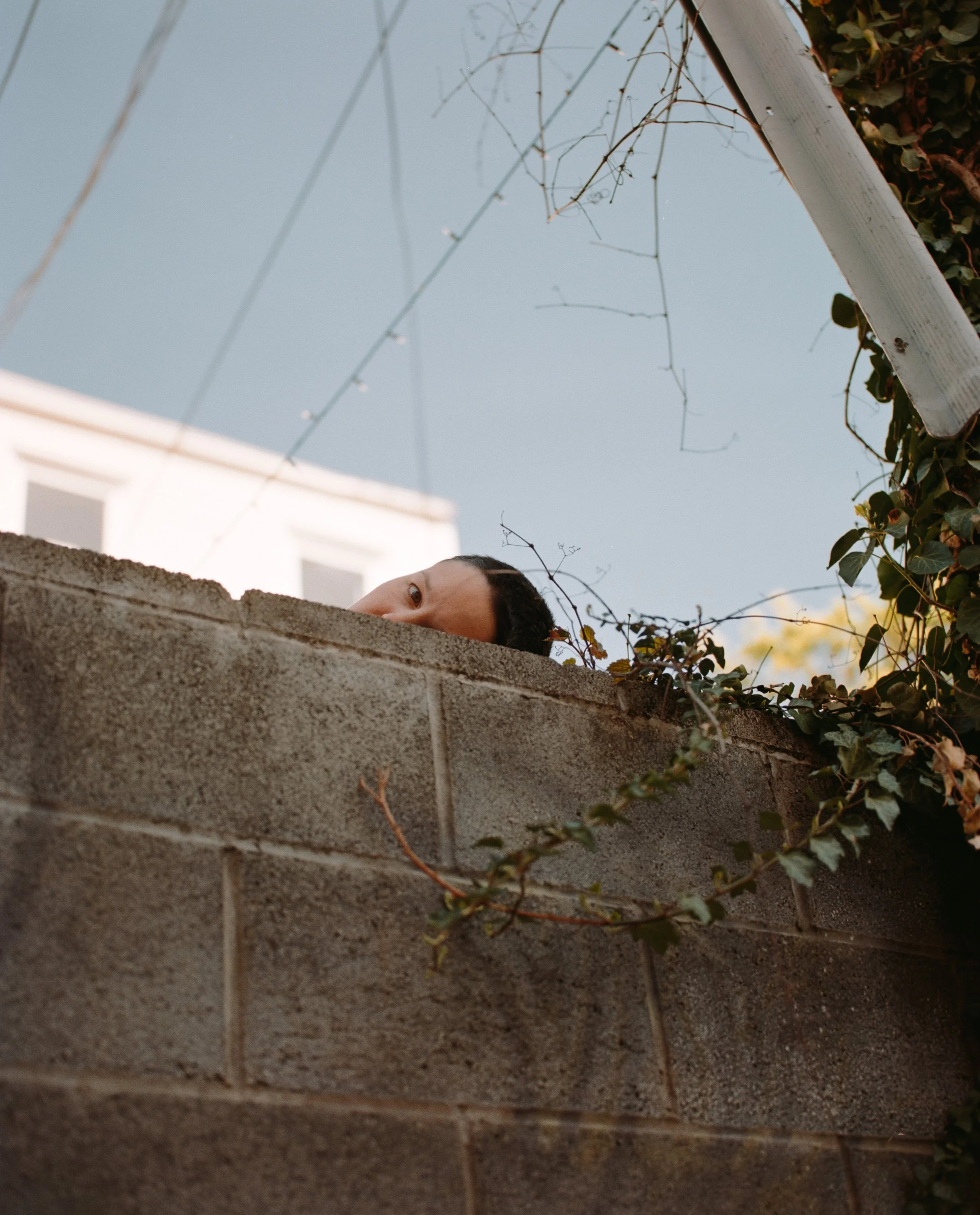
Blending painting, sculpture, and photography, her solo show Disassociations explores the tension between stillness and overwhelm. Using found objects, remnants of photographic prints, fabric, old paintings, 3D printed pieces and intuitive mark-making, these layered pieces reflect on the psychological residue of burnout and the invisible labor that often consumes women’s inner worlds.
To find out more about Lillian and her work, visit her website.

Tending to What I Get
34 x 36 inches
Collage and assemblage can be unruly mediums- What is your process for creating harmony among the chaos of so many different kinds of media, colors, and textures in a singular piece?
My process with collage is an intuitive conversation between textural elements, painted scraps, and printed imagery on various surfaces. There is often a push and pull along the way where I’m fighting through conflicting pieces that make me question my choices. I let the layers guide the work and take the steering wheel because, somehow, in the end, it all typically comes together, and if it doesn’t, I use other media, such as drawing and painting, to “fix” it until it feels right.
You often use remnants of old paintings, photographs, and found objects in your work. How are these artifacts, whether they are personal or not, factored into the conceptual framework? How much weight (physically or conceptually) do you find those objects are carrying?
Most of the pieces I use are sentimental, but there are occasionally materials sourced from thrift stores. Many of the old paintings and photographs used in my work are chosen as a connection to a feeling of memory or nostalgia. There are collaged pieces I saved from personally significant coming-of-age paintings I made in art school 15 years ago. In “End of an Era”, there are scraps from a former painting titled “Taking a Moment to Remember You”, a large abstraction that was made to process my mom’s fatal overdose in 2010. There are scraps from paintings I made about complicated love, and in “Romanticized Memories”, I used vintage checkered wallpaper in the background, taken from an old bathroom in my Grandmother’s Pocono mountain house that had been in the family since 1953.
Talk to me a little bit about the choice to cut the edges of your paintings. What was the thought process behind this decision? How does this transform the landscape of your work?
I slowly made the transition to preferring loose, unstretched paintings around 5 years ago. The art school voice in my head said it was a cop out to not stretch my paintings, but with the raw and vulnerable nature of these psychologically driven pieces, it felt wrong to contain them in a traditional frame. The boundaries and edges end up shifting throughout the process, as a part of the conversation with mixed materials on the surface. It is not clear exactly where the edges are until the very end of the process.
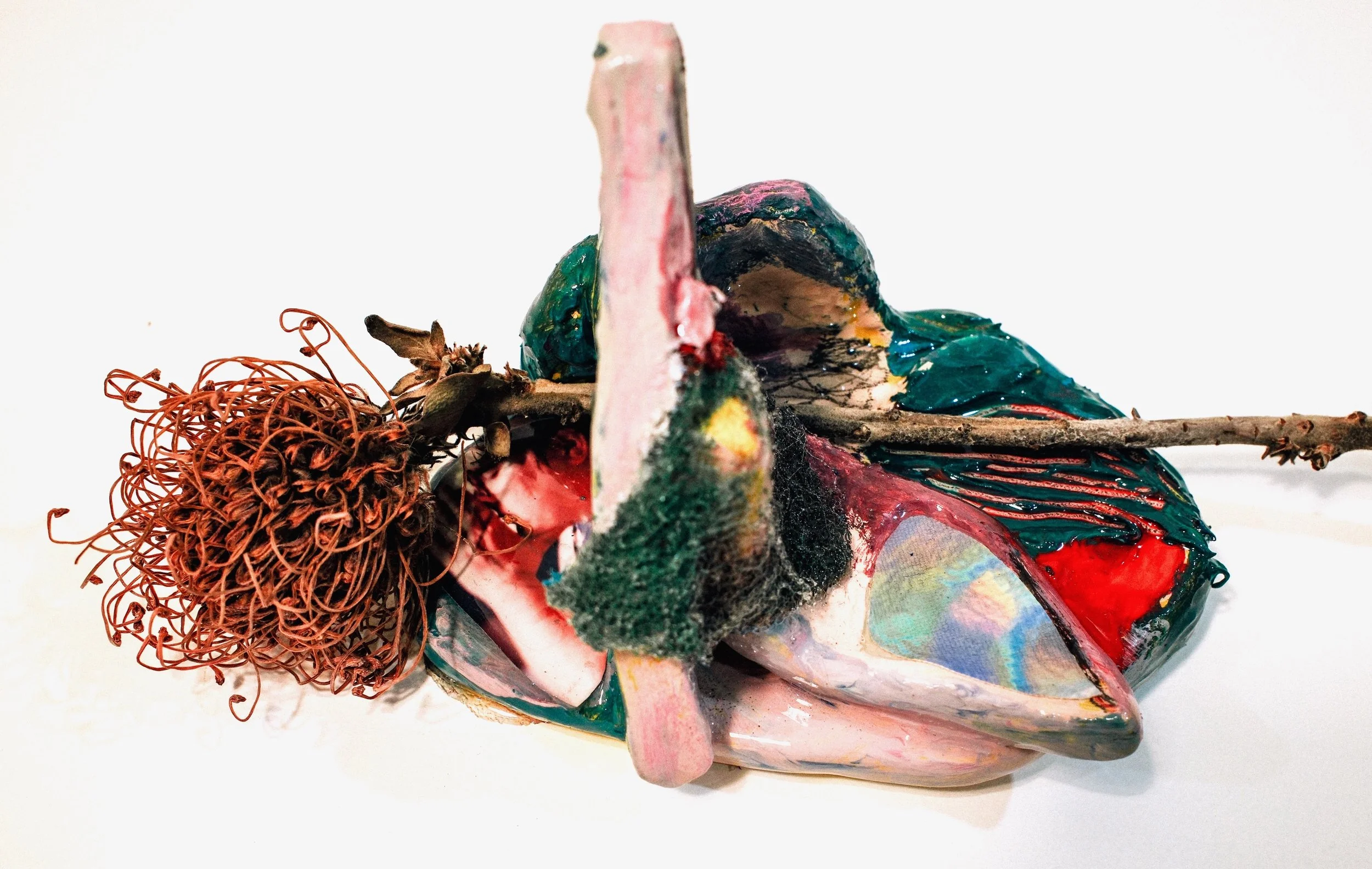
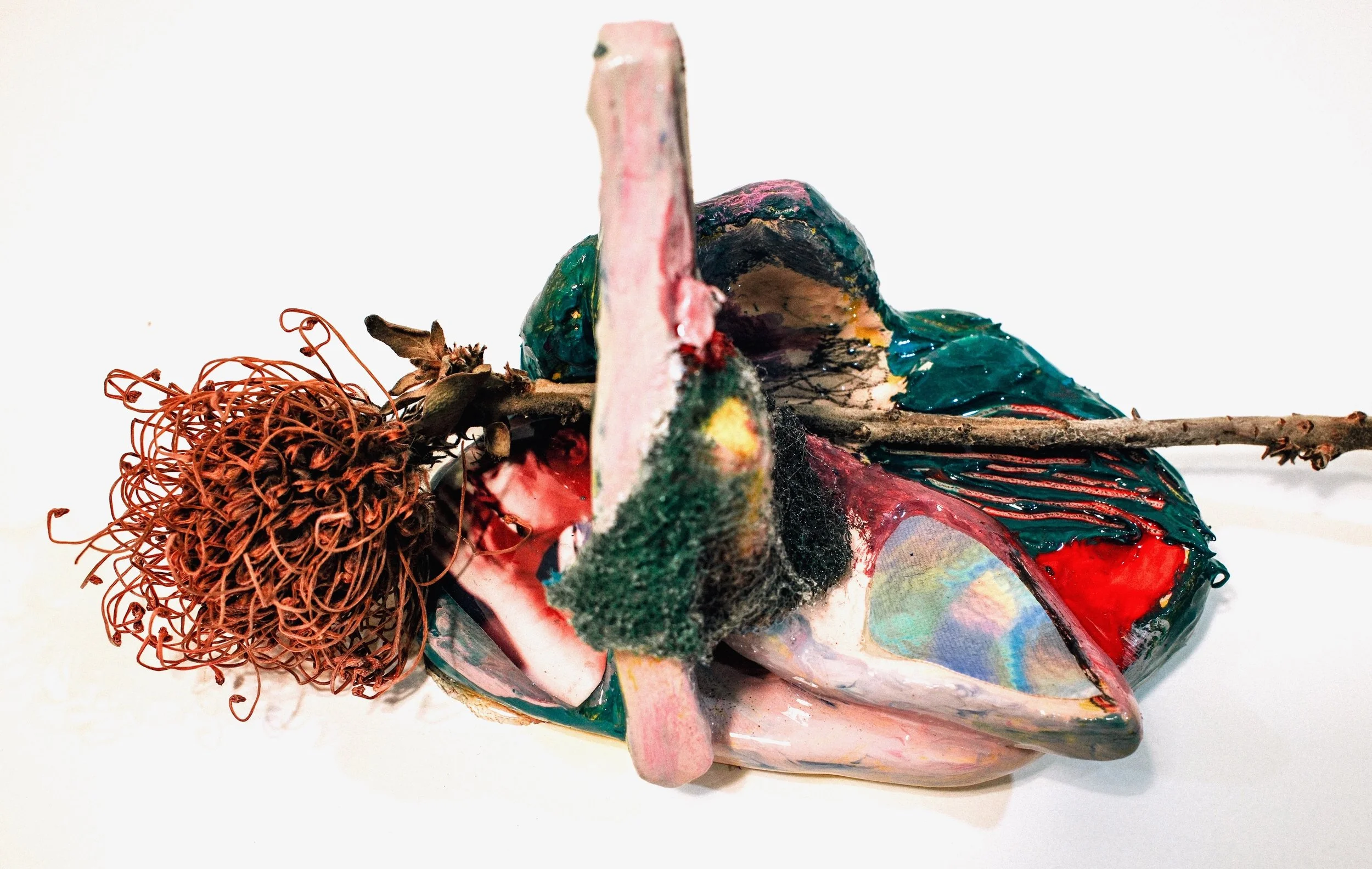
Dishes of the Past
4 x 7 x 5 inches
Your free-standing sculptures are composed of your assemblages sitting atop broken concrete and old windows. The positioning of these pieces feels precarious-what are you thinking about in combining all of these objects that have such differing materiality?
The sculptures are supported by antique windows resting upon stacks of broken pavers, a physical manifestation of the unstable foundations that often underpin the weight of domestic expectation. These fractured supports serve as a reminder of the constant, invisible effort required to hold together a structure that is already coming apart.

Disassociations
A solo exhibition by Lillian Chun
Patricia Barland Gallery I May 16-June 14, 2026
Gallery Hours
Monday-Thursday 10 am-8 pm
Saturday & Sunday: 10 am-2 pm
Starting June 7th, CAC is closed on Sundays for the summer.