
In the Studio with Artist Yewande Kotun Davis
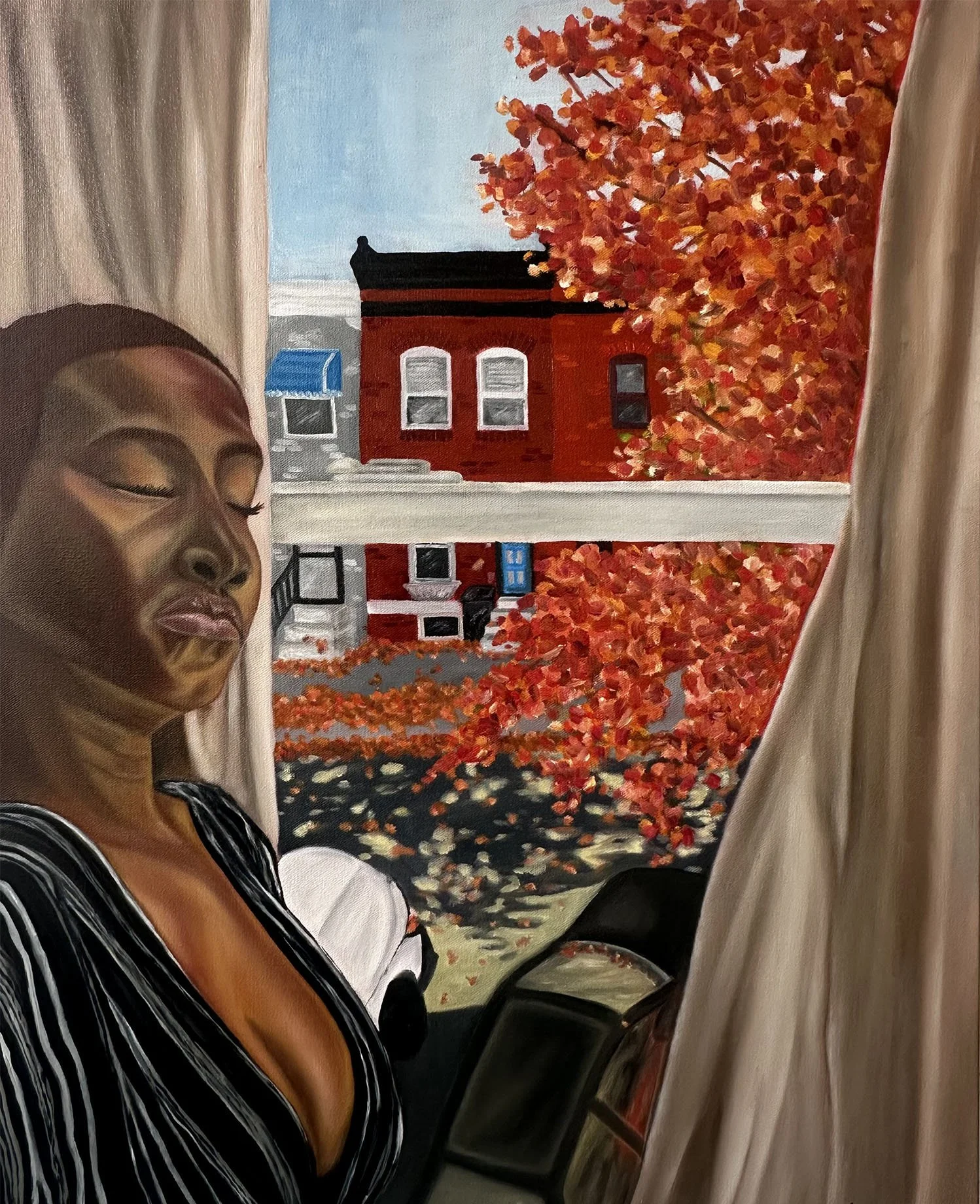
Today, we are going In the Studio with artist Yewande Kotun Davis. Her artwork is on display at our current 25th Anniversary Legacy show on display June 24 - August 30, 2026 in Hal Gomer Gallery.
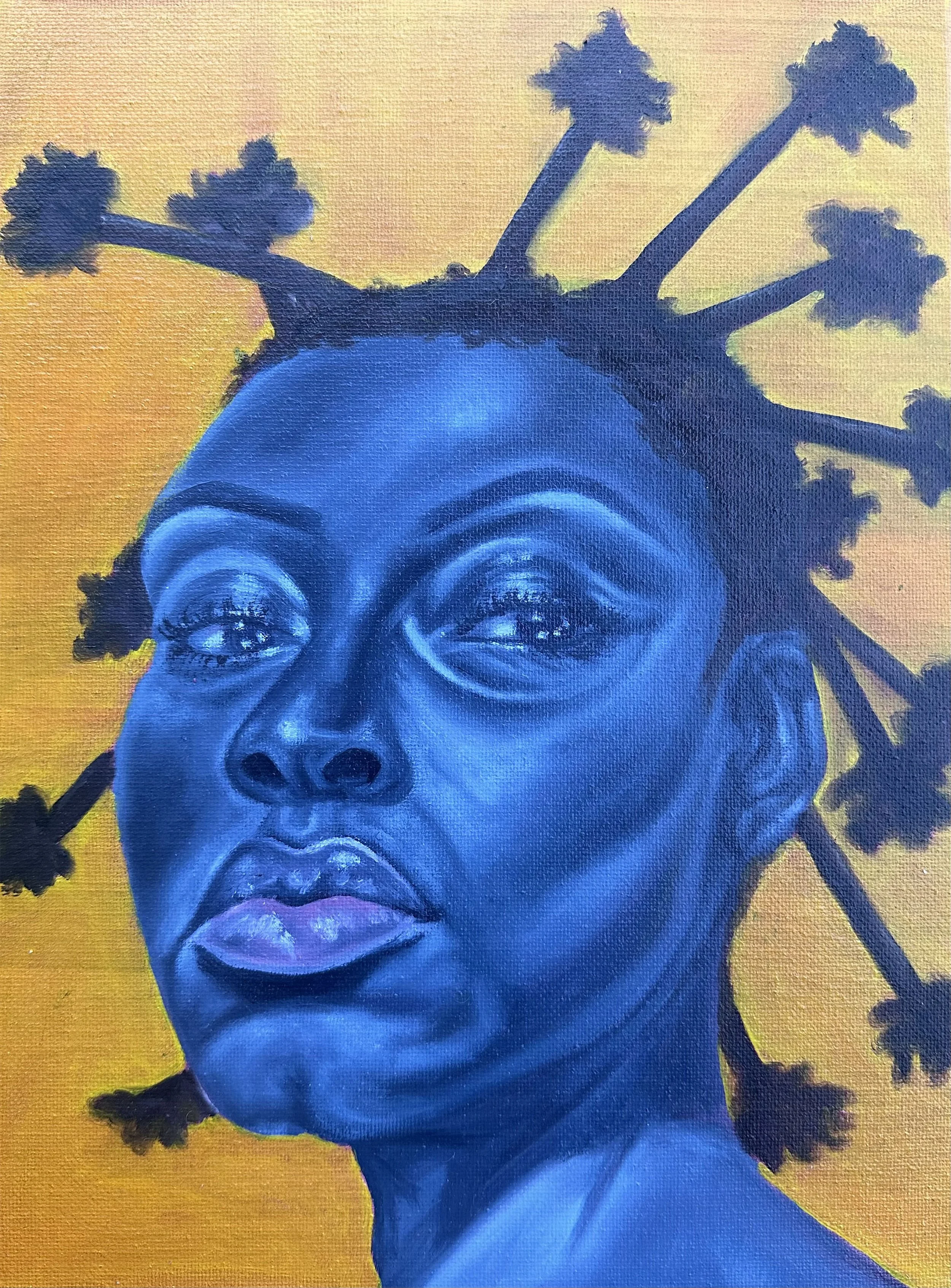
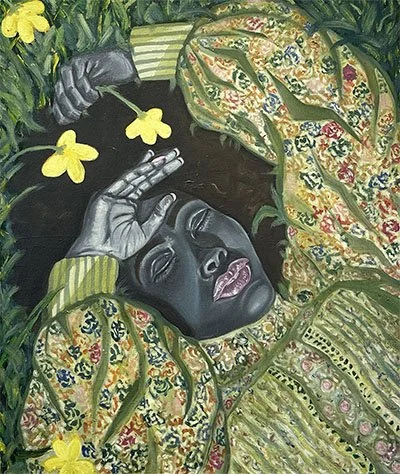
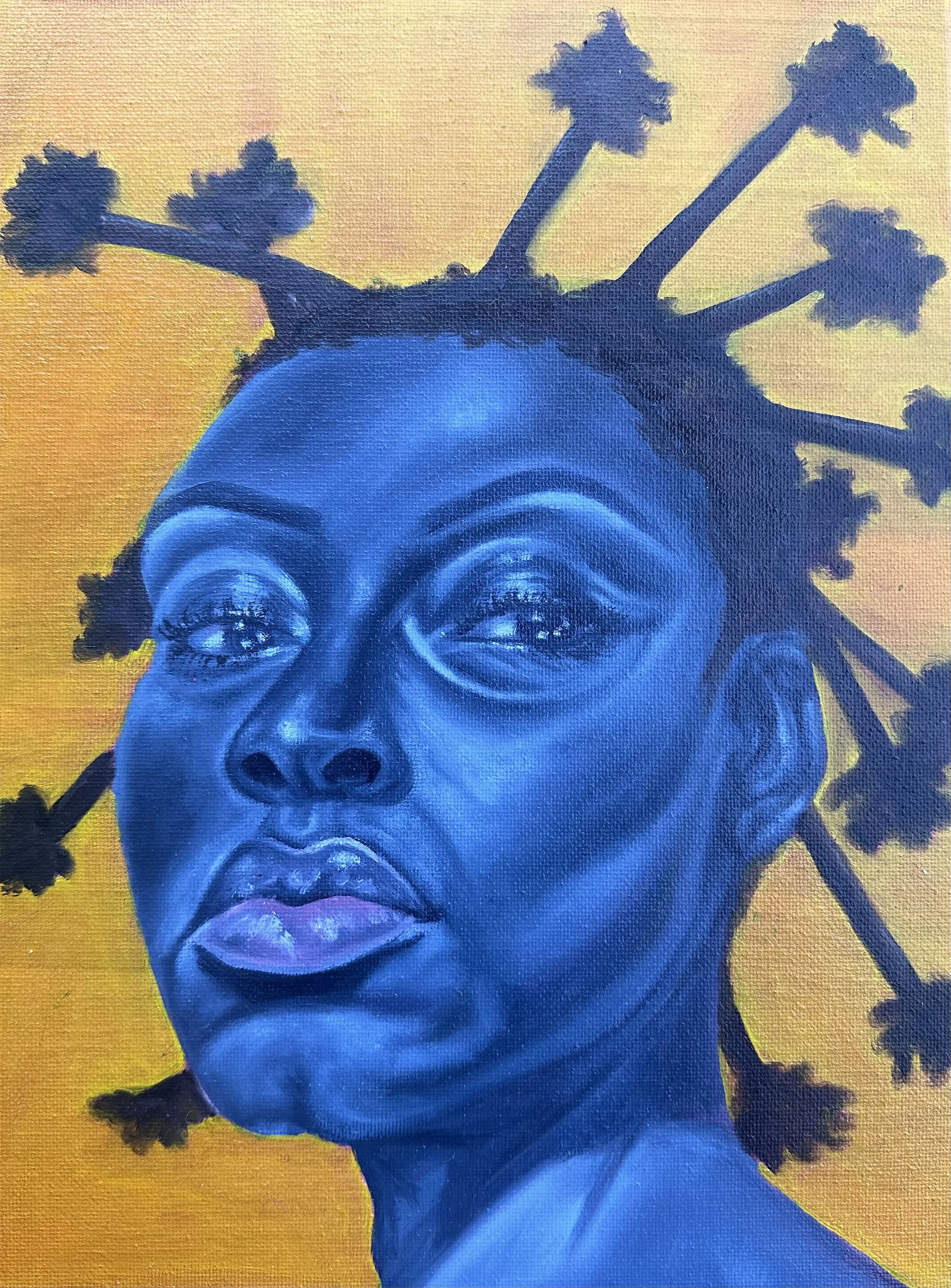
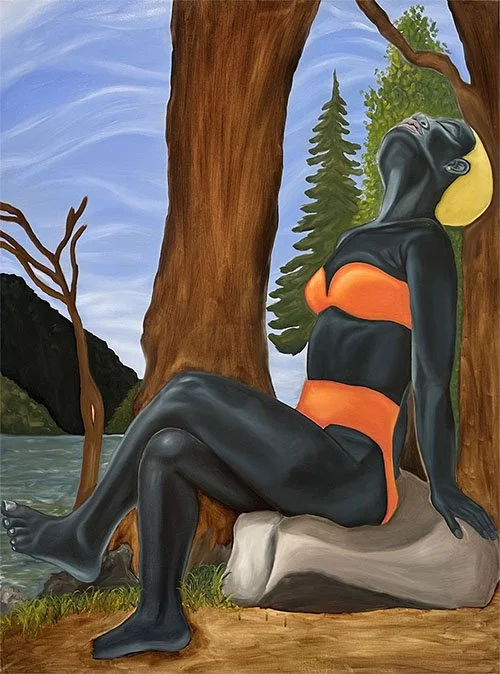
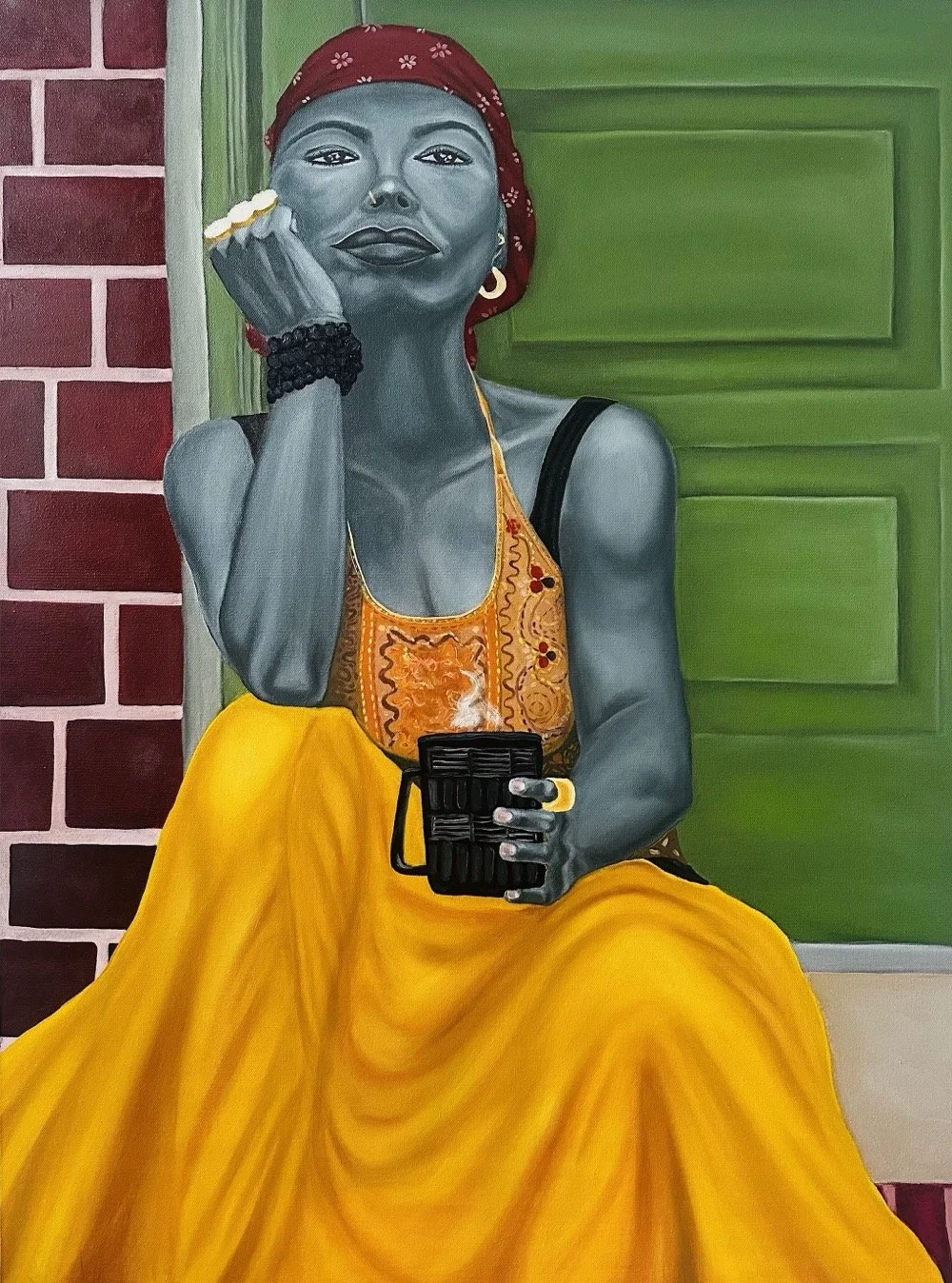
Yewande is an American Nigerian visual artist, curator, and social practitioner using her creative practice as a means for community care. While her first career as a healthcare administrator lends to her expertise at the intersection of health, wellness and racial justice, her Nigerian heritage and Southern upbringing lend to her love of storytelling. As such, Yewande’s work celebrates, reframes, and even reimagines narratives that have been inadequately or falsely delivered in the past. Through direct social and community engagement, which often informs her work, Yewande typically centers the layered experiences of Black folks— most often women and children— highlighting joy, resilience, and shared humanity. Within her work, Yewande marries first-hand narratives with vibrant colors, reimagined yet familiar imagery, and attention to naming in order to highlight our connectedness and drive meaningful dialogues that promote healing and redefine the human experience.
Visit https://resoluterose.com/ to learn more about Yewande and her work!
What drives you to continue making art?
Simply put, I have so much to explore, and so much more to say. When I initially started making art, it was because I felt silenced. In many ways, creating not only gave me a voice, but it allowed me to make sense of the world around me. Today, my art is an active dialogue with versions of myself, my community, and my ancestors. I have also been thinking about legacy quite a bit, and what I want to be left behind well after I’m gone. I want my art to say something about who I am, what and who I care about, and the worlds that I imagine.
How do you decide a piece is finished? Do you ever come back to something you previously finished?
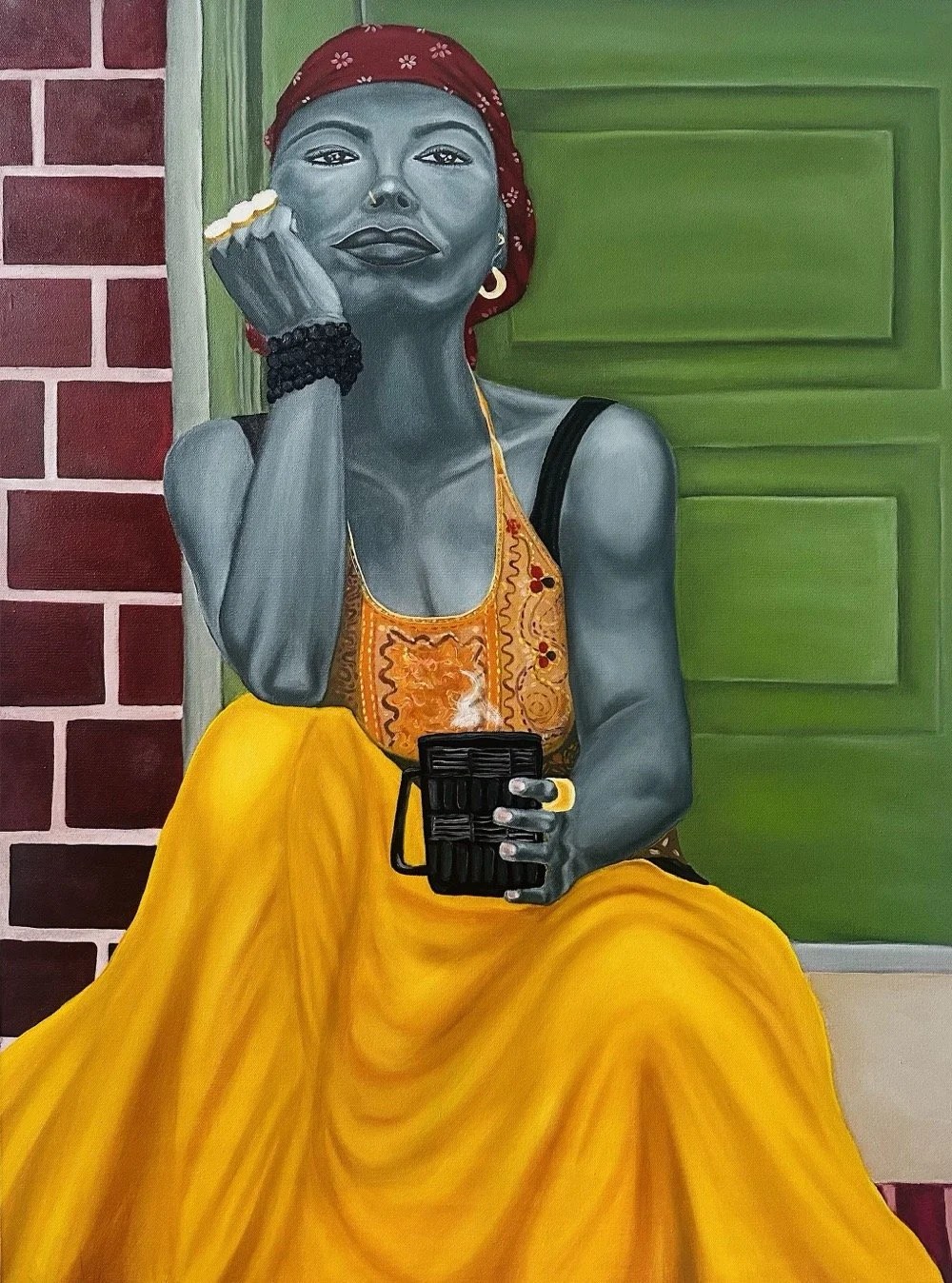
Most of the time, it’s a feeling. When I feel myself starting to overwork the piece, I stop and walk away. That said, there have been one or two pieces that I had to revisit. In the case of these paintings, I was admittedly up against a deadline and had to get the piece to good. I can say that revisiting the pieces either took them up a notch or got them scrapped altogether.
What has the process of developing your own artistic voice been like?
It’s been an active process of (self) inquiry— what am I trying to say, and what’s the best way to convey it? Early on, my artistic voice was shaped through engaging my community quite a bit and basically summarizing collective experiences into my artwork. As a consensus builder, I found myself thinking about and wanting to relate to my audience quite a bit. Over time, I’ve been learning to de-center my ‘audience,’ trust and center my own voice, and give in to the vulnerability that is required to make what I want to make.
How does a piece evolve from an idea to a finished work?
Most of the time, pieces come to me well before they actually get made. Sometimes, I’ll start with the name and work backwards. Other times, I’ll sit with the imagery until it feels like it’s ready to move forward. The process from the idea to starting can take anywhere from weeks to years in some cases. Once I get started, though, I’m usually prepared to take it all the way, and I’m usually 90% sure of what I want the final version to look like. The 10% is where I leave room for the magic to happen.
How do other artists influence your work? Do you consider your practice collaborative?
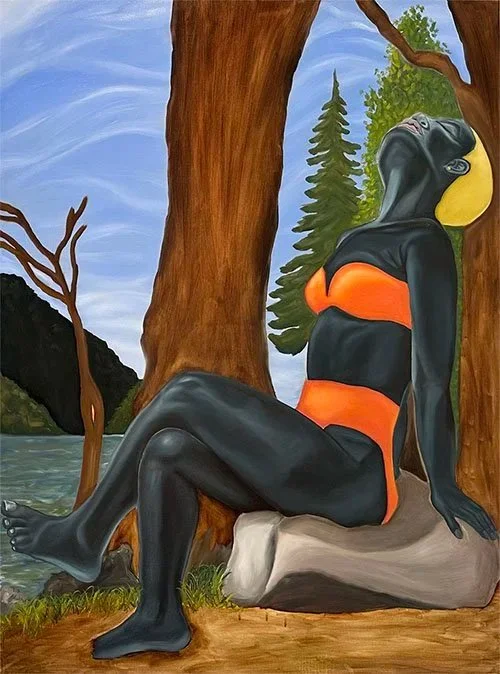
I try not to allow too much outside influence from other artists into my work when I’m truly in the mode because I don’t want to be unintentionally influenced in a way that makes my work feel unoriginal to me. I will say that when I experience other artists’ work, I mostly focus on how their work makes me feel and why. I inquire about imagery and motifs, use of color, composition, all of it. In my mind, I try to reverse engineer how they landed at this final piece from an energetic standpoint— mostly because I want my work to evoke emotion. I’d also say that I collaborate with music more than other visual artists. I’m influenced deeply by music.
Is there a common thread, theme, or motif you always find comes up in your work?
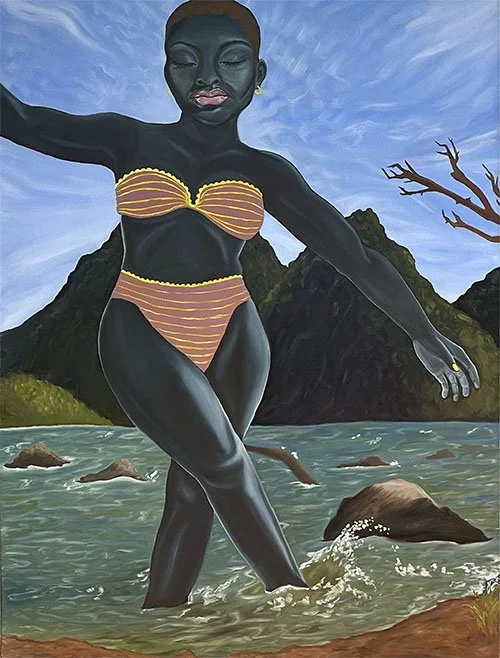
I think my blueish ‘blurple’ skintones tie my work together. What started as an experiment became an exploration of the color blue as a connector for people across the African diaspora. Sometimes, the color is read as gray, which I also lean into— because nothing is truly black and white. There is always a gray area, or something that can be left to interpretation. I’ve been thinking about how to push this a bit more, and I’m looking forward to exploring it in future works.
Legacy
Chesapeake Arts Center’s 25th Anniversary Show
Hal Gomer Gallery I June 24 - August 30, 2026
Gallery Hours
Monday-Thursday: 10 am-8 pm
Saturday: 10 am-2 pm