
In the Studio with Sara Allen Prigodich
Today, we are going In the Studio with artist Sara Allen Prigodich. Her artwork is on display for our current 25th Anniversary Legacy exhibition on display June 24 - August 30, 2026 in our Hal Gomer Gallery.
Sara received her BFA in ceramics from the Hartford Art School at the University of Hartford and her MFA in ceramics from the University of Massachusetts Dartmouth. She has exhibited her work nationally and internationally in both juried and invitational exhibitions and has work in both private and public collections. Her professional experience includes positions such as studio assistant, ceramics department technician, resident artist, as well as instructor. Please find attached my responses as well as a few images of my work. To learn more about Sara and her work, visit her website and instagram @s_prig.
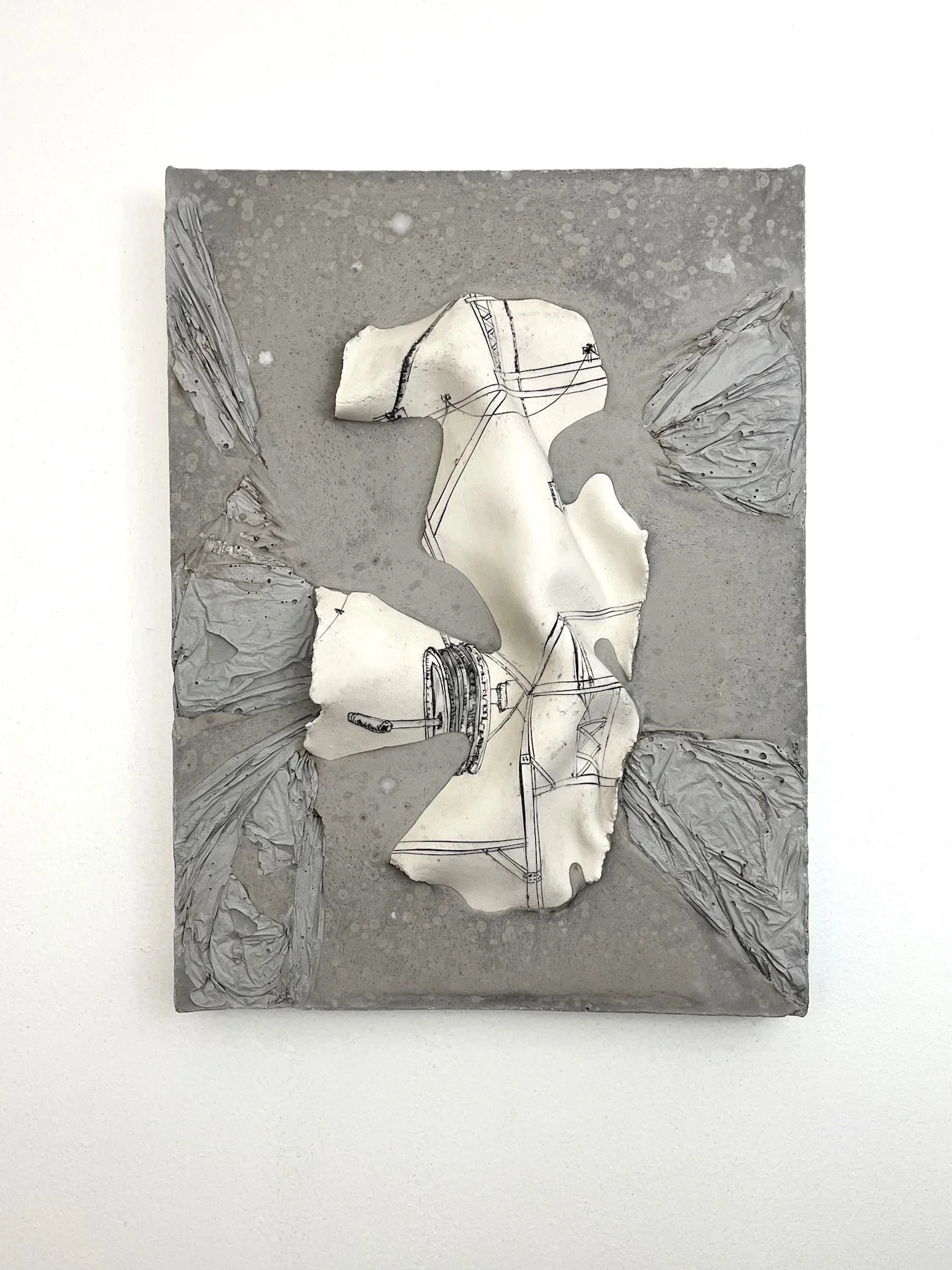
Crank
How does a piece evolve from an idea to a finished work?
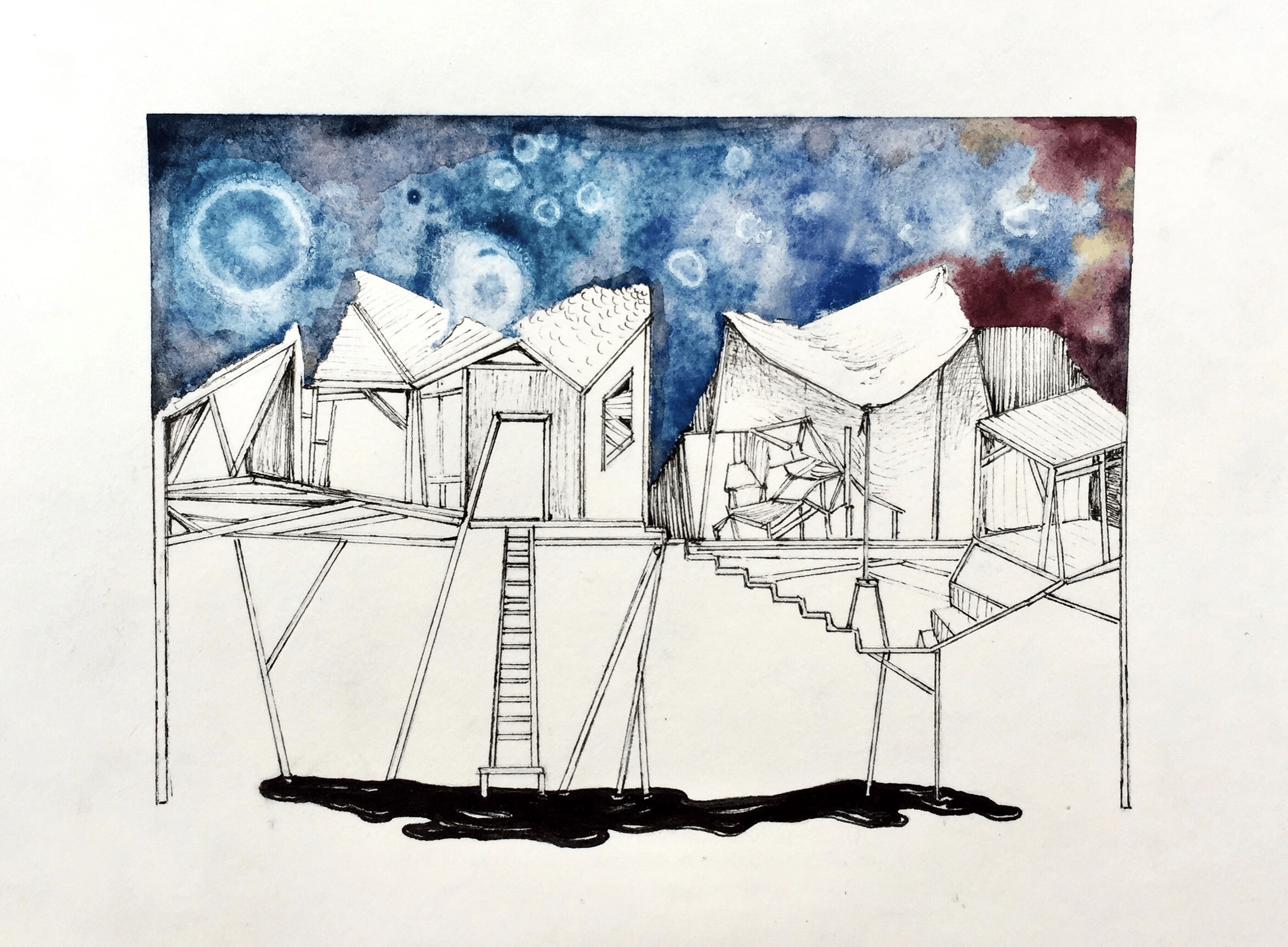
Drawing and sketching have always been integral parts of my practice. Almost all my sculptures start with a sketch or two, but I also make small drawings independently from my three-dimensional work. The imagery and subject matter between them are often similar, but with enough subtle di@erences to allow for a progression of ideas— almost a conversation— between the two- and three- dimensional pieces. I’ve always felt that my drawings allow me to defy gravity and entertain impossibilities in construction that I wouldn’t be able to physically build in my sculptures. Many times, those drawings morph into an idea for a sculpture which then leads to various stages of construction. I typically begin a sculpture with the ceramic components first. Once fired, I continue building with other materials.
Is there a common thread, theme, or motif you always find comes up in your work?
Yes, my work explores themes of memory and our relationships to interior spaces and structural objects. I see my sculptures as physical representations of our psychological incongruities: the doubts, questions, and shifts in perspectives through which we view memories. The act of reflecting upon our experiences can often become an investigation, a system of discovering and constructing underlying emotional structures and mining through personal histories. I find that a memory’s ability to mutate—to restructure reality or to erode the truth—is a potent source of inquiry for my work. My sculptures explore these themes by depicting fictional machines and mechanisms. These structures serve as stand-ins for the human condition; reflecting on our constant need to find answers and maintain order, even when it may not be possible. Through their ambivalence, the forms evoke a curiosity, a desire to understand their conflicting state.
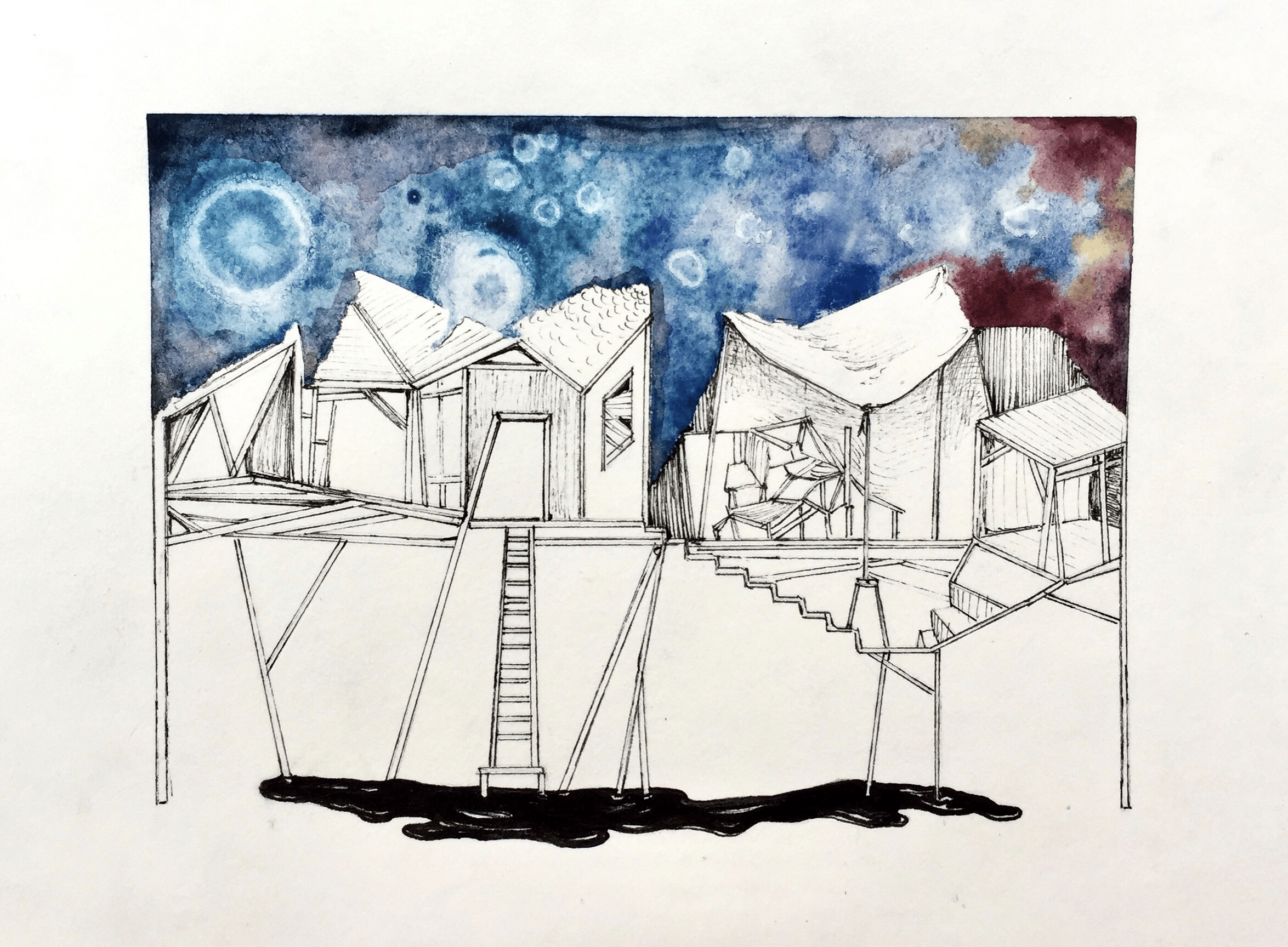
Where I Sleep
How do you decide a piece is finished? Do you ever come back to something you previously considered finished?
I usually decide a piece is finished when I’m content with how it looks once it’s been installed or set up. I regularly come back to pieces months down the road to re-work them or to adjust. I often work in batches and stages. I’ll create the first component of a new series within a matter of months, then collectively move on to the next component, etc. etc. I think that’s one of the fun parts of creating mixed media work—I get to create my own systems and processes to suit the needs of each piece.
How does your work fit in with the history of the mediums, visual language, motifs, etc. you utilize?
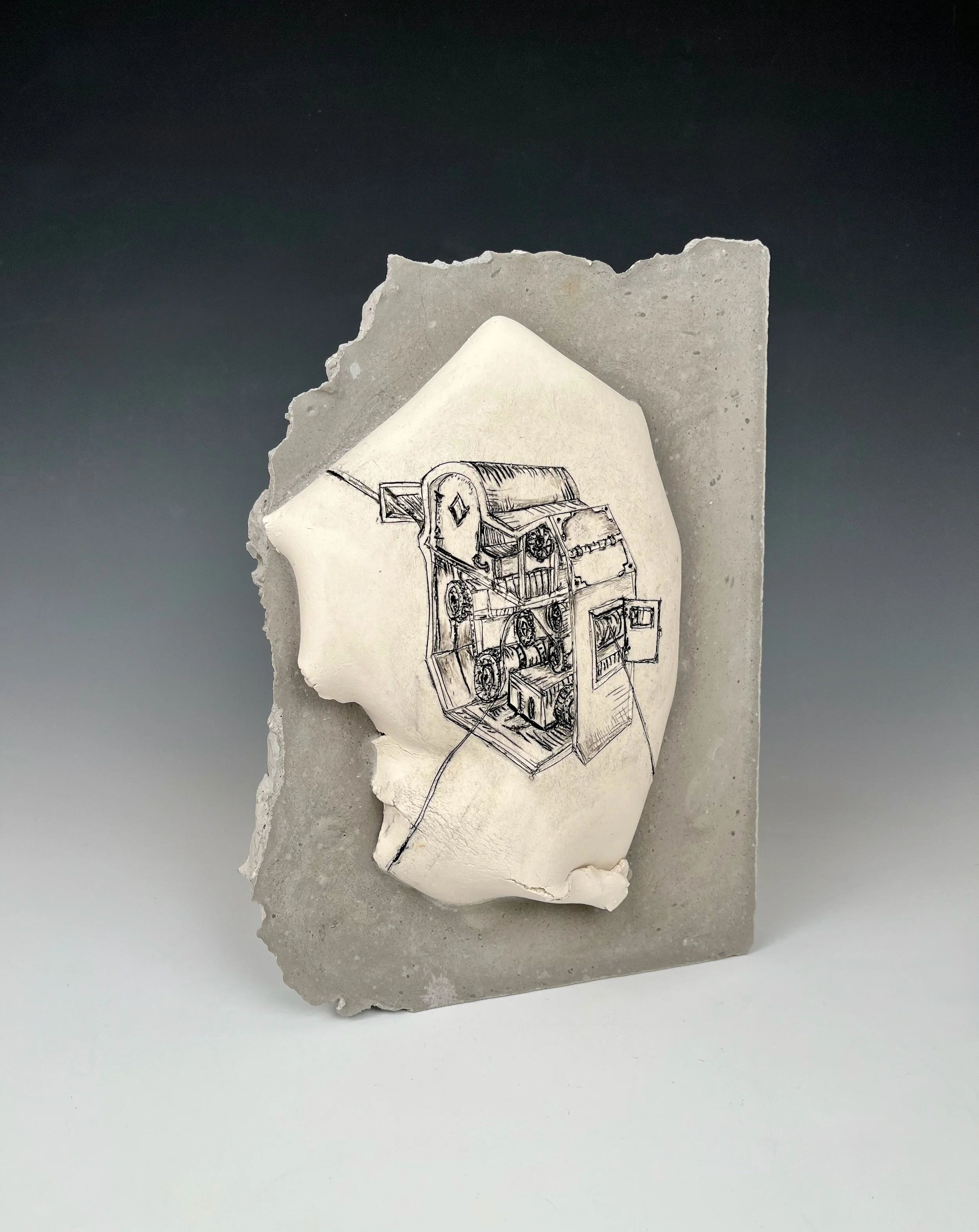
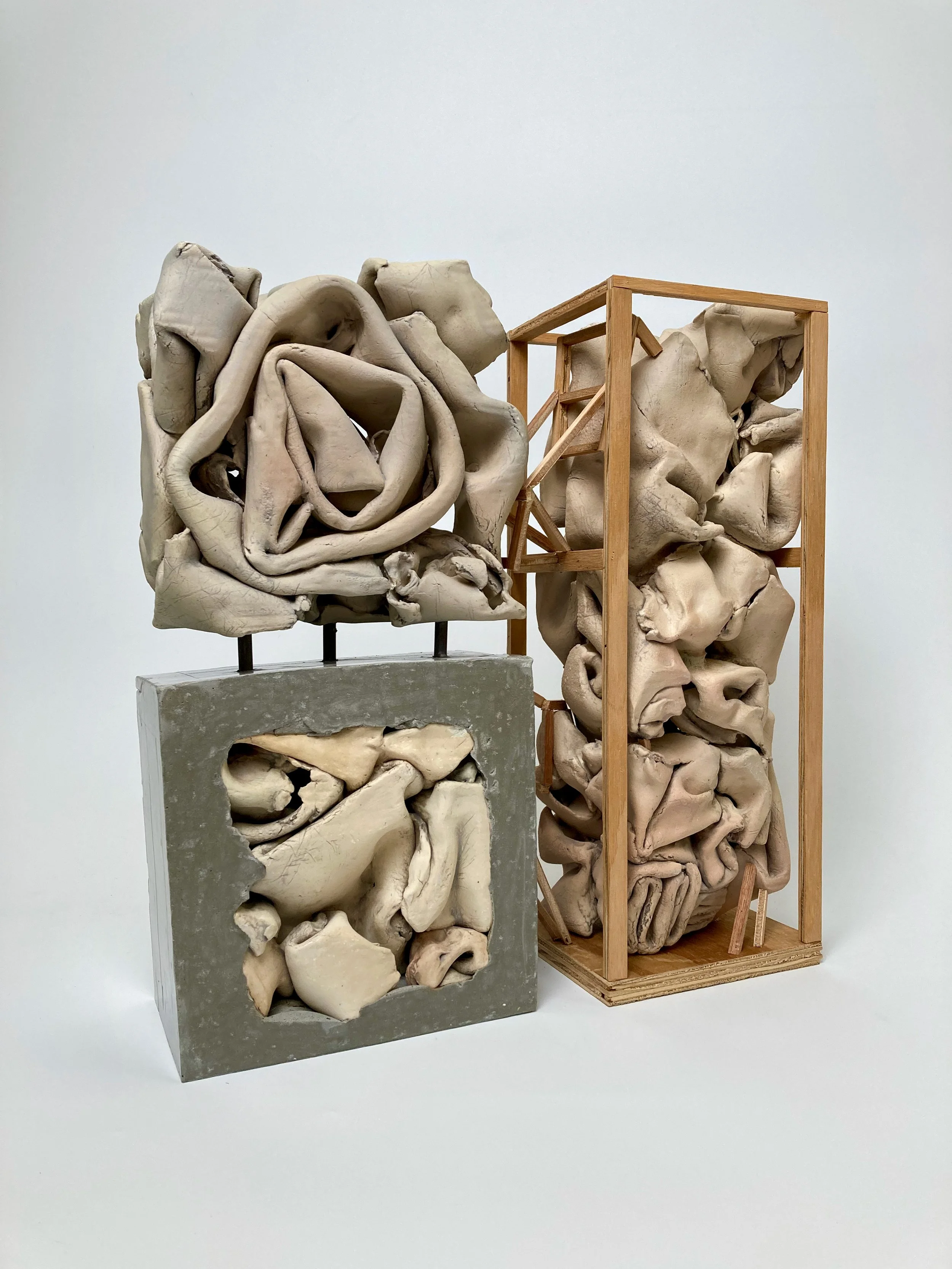
Considering my background in ceramics, I would say that my use of porcelain as a material is rather non-traditional if viewed from a historical ceramic lens. However, as a mixed media sculptor, I see the use of porcelain as just one of the many possibilities of media available to me as part of a visual language. Each material I use serves as a different vocabulary within a visual language, taking each material’s inherent associations into consideration. For example, the stability and strength of concrete versus the fragility and weakness of splintered plywood. To see a fragment of rafters, or the layers within a wall removed from a domestic space, allows us to fill in the rest of the visual image and to recreate our own memory within. I use variations of these non-ceramic materials and found objects as a means to strengthen the presence of form as well as create a presence of absence.
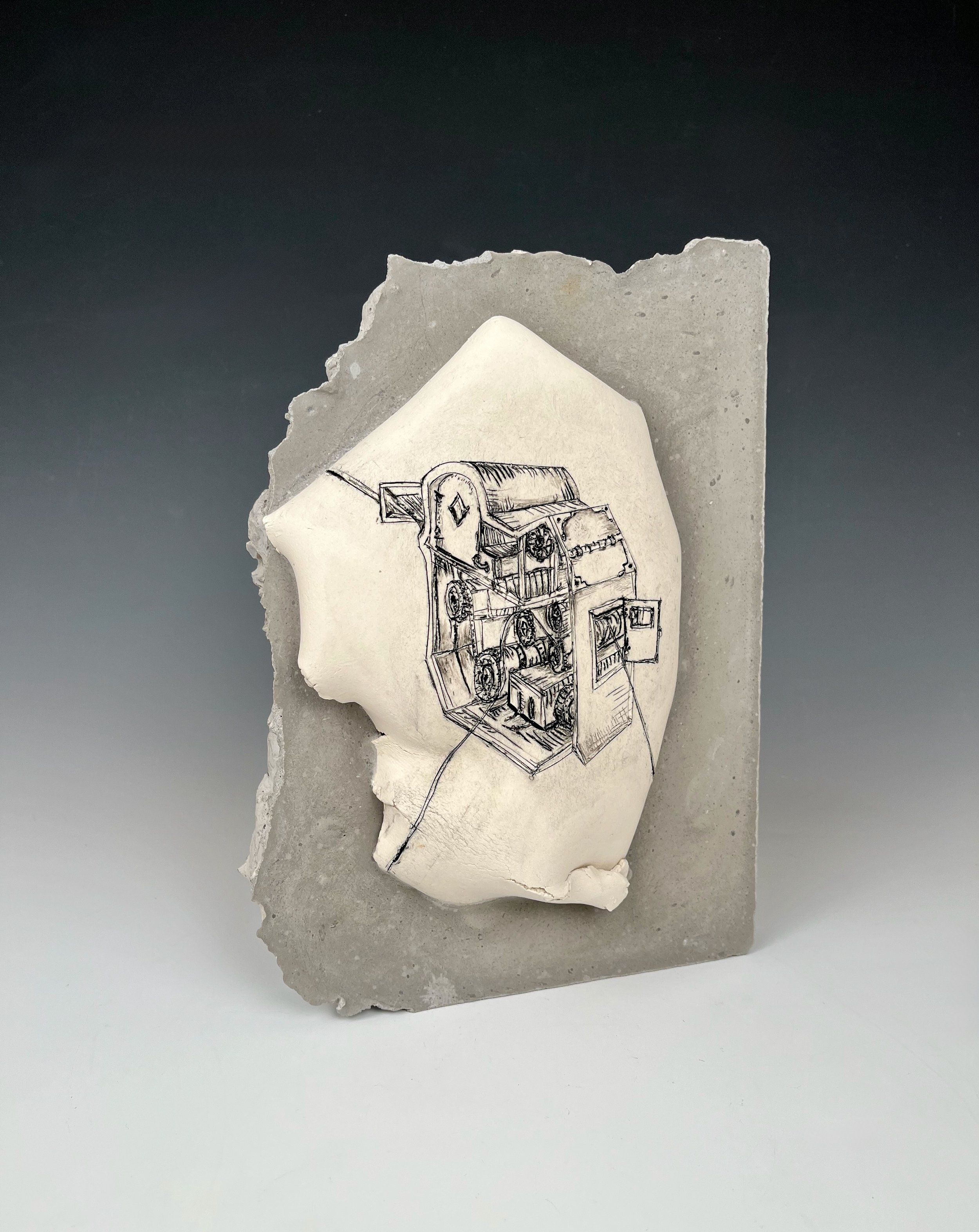
Engine
How has your work/practice evolved since you first exhibited at CAC?
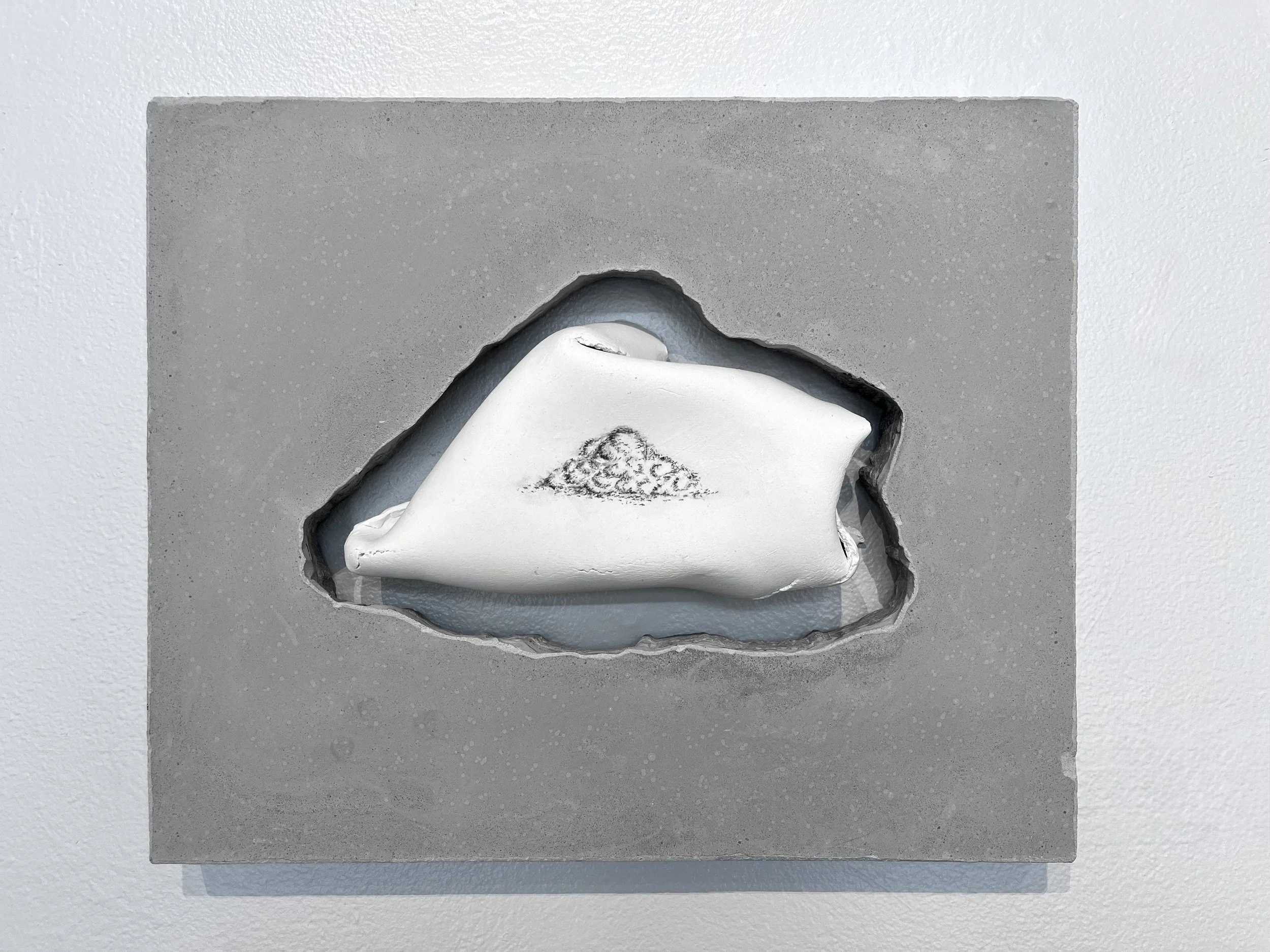
I last exhibited my work at CAC in the 2024 Her Voice, Her Vision: Women’s History Month exhibit. Since that wasn’t too far in the past, I’d say that my work has only slightly evolved since then. I have continued to explore the primary mediums of porcelain and concrete; however, I’d say the bigger shift has been in the imagery that is carved onto the work. While thematically similar, I’ve started creating much more detailed carvings of objects on the porcelain panels, rather than more broad and abstract compositions. I’ve also started to break out of the traditional “box” or rectangle format, experimenting with creating deteriorating edges.
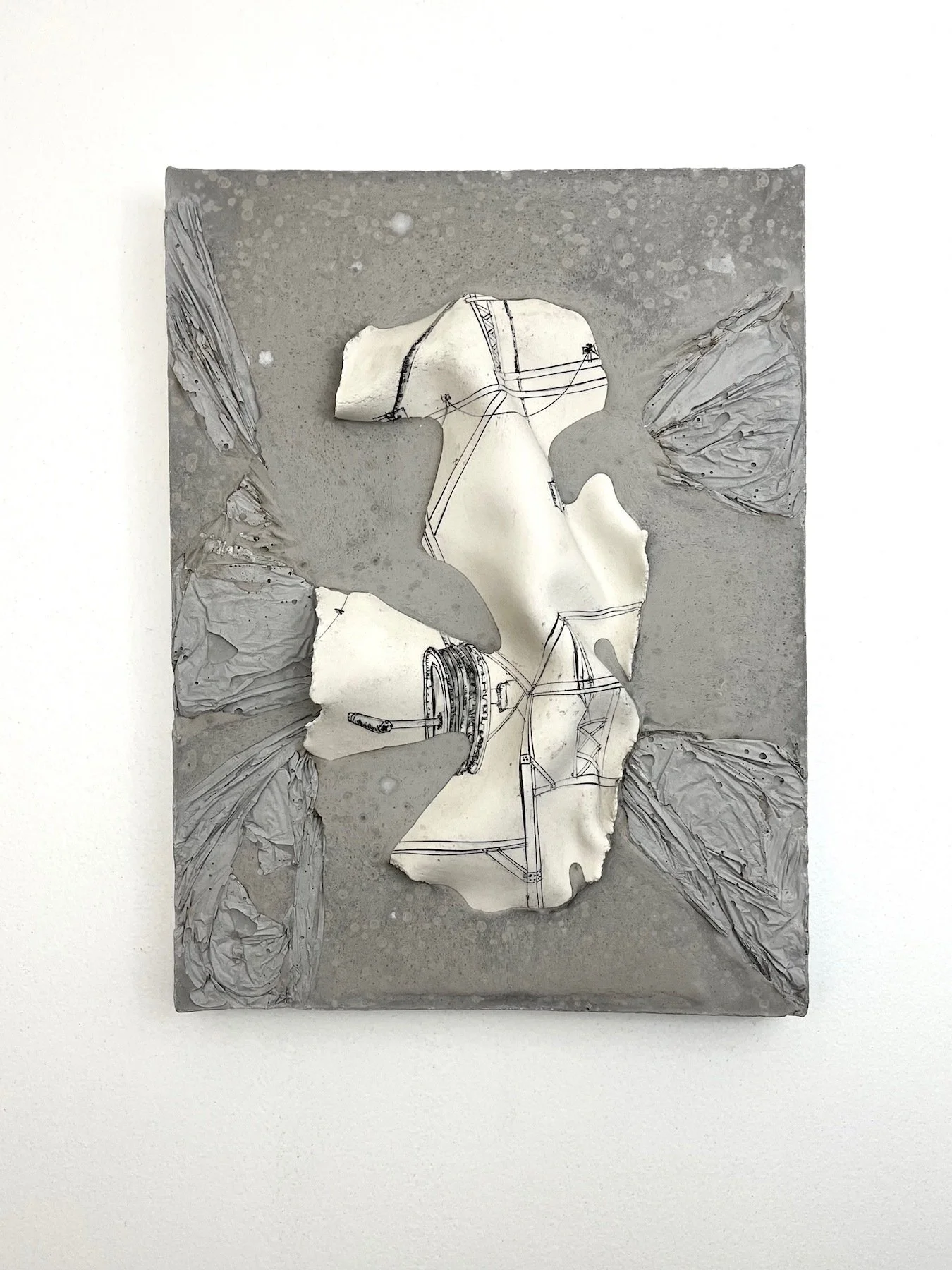
Legacy
Chesapeake Arts Center’s 25th Anniversary Show
Hal Gomer Gallery I June 24 - August 30, 2026
Gallery Hours
Monday-Thursday: 10 am-8 pm
Saturday: 10 am-2 pm